
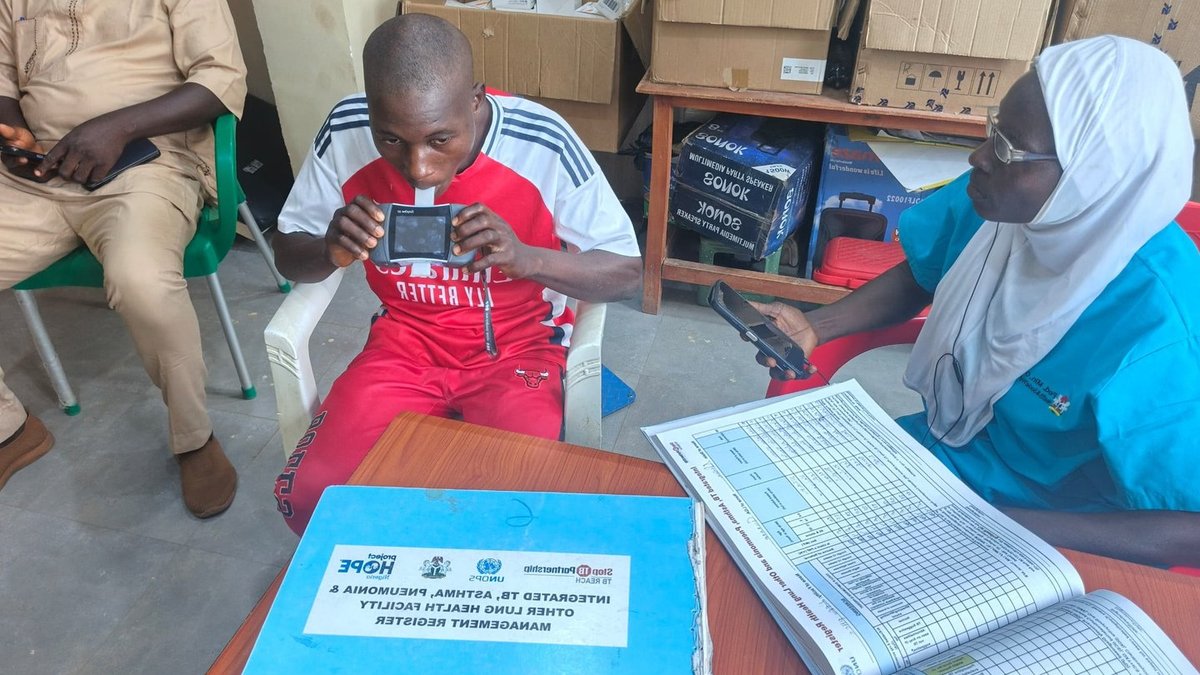
In Niger State, Nigeria, a new approach to diagnosing respiratory illnesses at primary healthcare centers (PHCs) is showing promise but faces sustainability challenges. Zariya Hashiru, pregnant when diagnosed with tuberculosis (TB), highlights both the potential and fragility of the initiative. Her five-week counseling and treatment journey, which included regular follow-ups and education sessions, reflects an effort to integrate screening for TB, asthma, and pneumonia at 15 PHCs in the region. “I was very happy when I was told my sample had turned negative after 6 months of treatment,” she said.
This approach mirrors the World Health Organization’s Practical Approach to Lung Health, which advocates for integrated respiratory care strategies. That matters in a country that accounted for an estimated 4.8 percent of global incident TB cases in 2024. The EXALT project, supported by the Stop TB Partnership and Project HOPE, addresses a critical gap in healthcare delivery by standardizing symptom assessment protocols that help health workers quickly categorize patients into appropriate diagnostic pathways.
Expanding Beyond Tuberculosis
The EXALT project’s integration extends beyond TB screening by incorporating spirometry for asthma and chest X-rays for pneumonia, ensuring broader disease detection without compromising diagnostic standards. Under Nigeria’s national TB strategy, rapid molecular tests like Xpert MTB/RIF Ultra or Truenat are recommended for TB diagnosis, while the project’s approach aligns with WHO guidelines for a full assessment of respiratory conditions. This methodology reflects a shift from isolated TB testing to a holistic assessment of respiratory health, enabling earlier and more accurate diagnoses across the 15 facilities. Adolescents like Safiya, who battled a six-year cough and stigma, exemplify how community outreach can uncover hidden cases and reduce diagnostic delays.
Results and Implementation Hurdles
The baseline report recorded 24 TB cases, 26 pneumonia cases, and 20 asthma cases across the 15 facilities between October 2023 and September 2024, highlighting pre-existing gaps in respiratory healthcare. Baseline assessments revealed stark deficiencies: none of the 15 PHCs had GeneXpert equipment, 46% lacked functional microscopy, and none had spirometers or nebulizers. Referral arrangements existed, but sample transport and feedback were inconsistent. Project HOPE reports that more than 113,000 people were screened between March 2025 and June 2026, diagnosing 259 TB cases, 783 pneumonia cases, and 335 asthma cases.
The increase is remarkable, but it should not be treated as proof that integration alone caused the reported results. Stock-outs of medicines and laboratory reagents have threatened implementation, as integrated screening cannot deliver better care when samples cannot move, results do not return, equipment fails, or medicines are unavailable. Sustainability, therefore, depends on the less visible parts of the system, such as recurrent financing, maintenance, clinical supervision, referral feedback, reliable commodities, and public data.
Sustainability and Government Commitment
The Niger State Ministry of Health, alongside the Primary Health Care Development Agency and State TB Programme, must publish costed continuity plans and track quarterly metrics on screening, diagnosis, and treatment completion. Dr. Kudirat AbdulGaniyu, the state’s focal person for non-communicable diseases, emphasized efforts to sustain gains at the grassroots level through community engagement and staff training. Her emphasis on community engagement shows the need for local leaders and volunteers to reinforce health education and support patients throughout their treatment journeys, ensuring continuity of care beyond the project’s duration.
This approach integrates with existing national policies on HIV/TB collaboration, leveraging established systems to enhance efficiency and reduce duplication of efforts. Nationally, the Federal Ministry of Health and Social Welfare, NTBLCP, and the National Primary Health Care Development Agency should define and finance a minimum PHC readiness package for integrated respiratory care. For Zariya, the chain from diagnosis to counselling and treatment eventually held. The test of the model is whether Niger State can make that chain reliable for the next pregnant woman, and for every patient whose cough may point to more than one disease beyond project support.


