
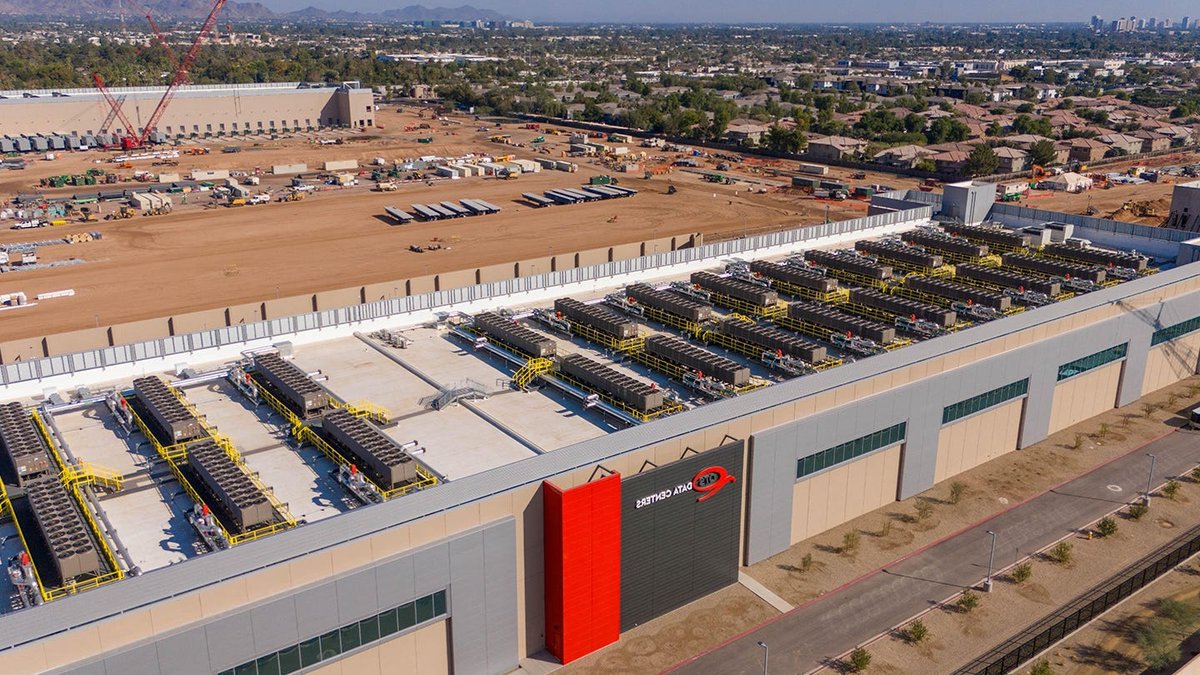
Health worries tied to a proposed $10 billion data center are becoming a flash point in the 2024 midterm campaigns, with residents, scientists and politicians all weighing in on potential risks.
Page residents push back
In Page, Arizona, a small town of about 7,000 people, the city council approved the sale of 500 acres for a mega-data center near Horseshoe Bend, a popular Colorado River landmark. The exact site on the parcel has not yet been chosen.
Doug Herrera, 64, lives in the house his father built and worries that a new data center could threaten his health.
Herrera cited light and sound pollution and a rise in temperature as specific concerns.
Local activists have gathered signatures on petitions and organized town-hall meetings.
Emerging health research
Environmental studies link the air emissions from backup diesel generators to heart disease, asthma and higher cancer rates. A modeling effort led by researchers at the University of California, Riverside projects up to 1,300 premature deaths per year by 2030 and a public-health burden exceeding $20 billion in 2028.
Noise levels from generators and HVAC units can top 90 decibels, a threshold known to damage hearing.
These findings are still early, but they give community groups a scientific basis for their opposition. Residents worry that by the time full studies are available, construction will already be complete, leaving them to cope with long-term exposure.
For people living near such facilities, the practical impact is immediate: increased utility bills, altered nighttime skies and a constant background hum that can make conversation difficult.
Read Also: Lyme vaccine fails late-stage trial test
In Arizona’s 1st Congressional District, the data-center debate has split the leading candidates. GOP hopeful Jay Feely, endorsed by former President Donald Trump, argues the project is essential to keep pace with China, while Democratic challenger Amish Shah calls for a pause on new construction.
National polling shows two-thirds of Americans oppose building new data centers in their communities, according to a recent Washington Post-ABC News-Ipsos survey.
Ohio’s Senate race illustrates the political ripple effect. Democrat Sherrod Brown has made data-center opposition a centerpiece of his campaign against Republican Jon Husted.
The parcel slated for the data center lies amid blackbrush and native grasses, a setting that draws tourists to the nearby Horseshoe Bend curve of the Colorado River. The proposed facility would be classified as a “mega” center, housing artificial-intelligence servers that stretch across tens of thousands of square feet.
Regulatory and industry responses
State officials have indicated that zoning and additional permits remain pending before any construction can begin. The attorney general’s office has urged a pause on new approvals, emphasizing the need for thorough environmental review.
Industry representatives point to a recent analysis of the Virginia market, noting that backup power usage, including diesel generators, is limited and that existing federal and state rules constrain emissions. The Data Center Coalition reiterated its commitment to act as a responsible partner in communities where projects are built.
Environmental groups continue to highlight that cooling systems may contain synthetic “forever chemicals,” which can accumulate in human tissue over time.
Local political fallout and ballot measures
In Ohio, more than a dozen local referendums concerning data-center construction are slated for upcoming ballots, marking the highest concentration of such measures in any state.
Senator Jon Husted’s office has emphasized that any data-center developers should bear the cost of local infrastructure, including energy consumption, and that decisions should remain under local control.