
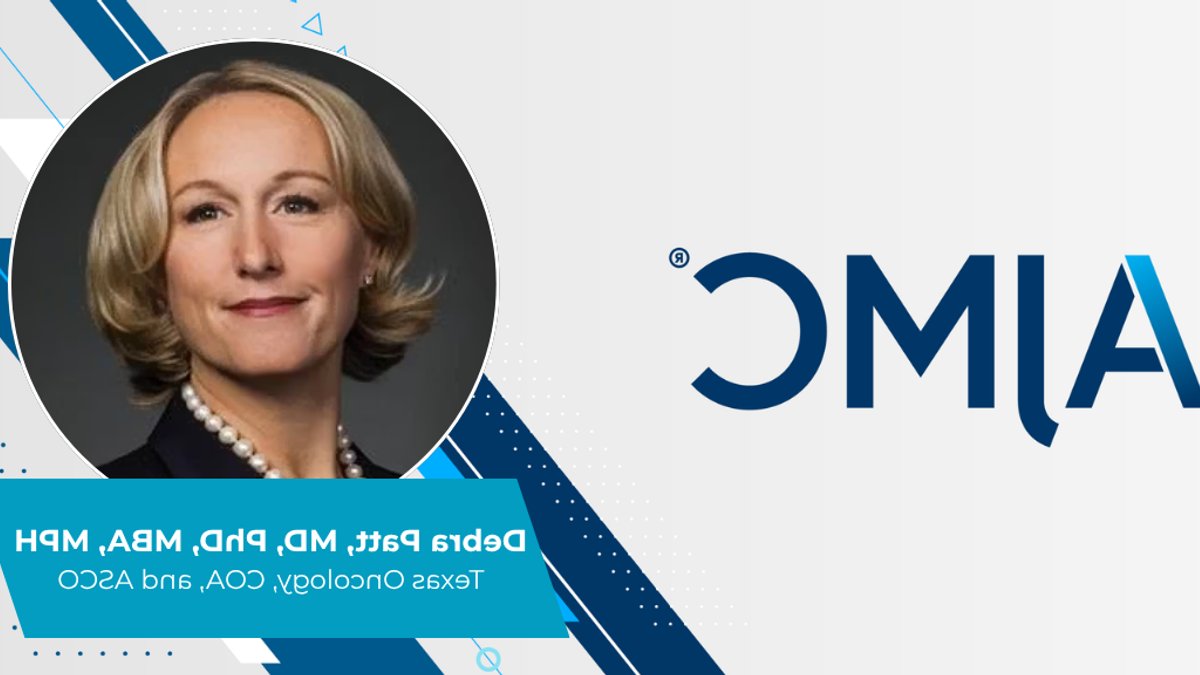
Debra Patt, MD, PhD, discussed the applications and challenges of artificial intelligence (AI) adoption in community oncology practices in an interview. Patt is the executive vice president at Texas Oncology and president of the Community Oncology Alliance. She served as a panelist in the “Executing Innovative AI Solutions: Lessons from Community Oncology” session at the Community Oncology Alliance Payer Exchange & Innovation Summit.
Patt expressed excitement about AI tools that reduce administrative burden, allowing skilled staff to work at the highest level of their expertise. An example is an ambient AI scribe service, part of the “Home for Dinner” campaign, used by roughly 600 physicians in her practice, eliminating the need to dictate notes after a clinical day. This tool lets physicians engage with patients instead of documenting on a computer.
AI tools also support triage nurses, who can pre-populate notes using clinical decision support. This has shifted their workload from 50% nursing and 50% administrative tasks to 80% nursing and 20% administrative, reducing decision fatigue without dictating clinical judgment. Patt noted that AI will touch every part of cancer care, easing the burden for clinicians and administrators.
Read Also: Community Hospitals Expand CAR T-Cell Therapy Access
Patt compared AI in cancer care to the movie Everything Everywhere All at Once, saying it will ease the burden of practice, allowing for better work-life balance and sustainable practices. She identified advocacy as the first hurdle to AI integration, as practices must build a case and demonstrate return on investment to executive leadership.
Patt emphasized the importance of seeking innovative vendors as a broader solution, rather than point solutions. She pointed to a 6-year partnership with vendor Canopy as an example, which began with electronic patient-reported outcomes and expanded to remote patient monitoring. Additional challenges include security and compliance concerns, as well as inherent AI risks like bias, hallucination, and error, which must be understood and managed.
The Community Oncology Alliance formed an AI task force and published a playbook to help practices make informed adoption decisions. Patt highlighted the “Home for Dinner” campaign, which includes an ambient AI scribe service, as an example of AI tools that can reduce administrative burden.


