
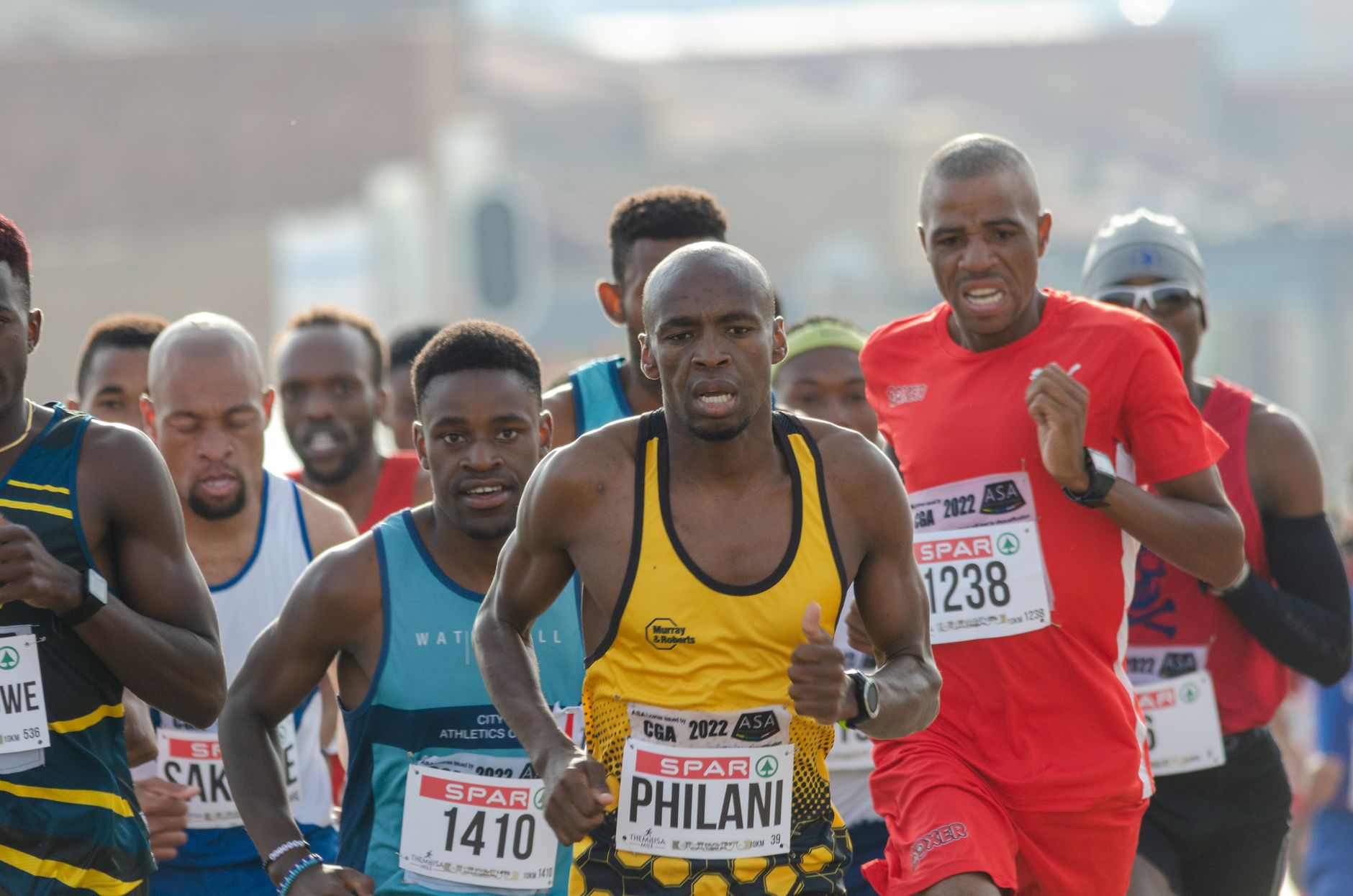
The sidewalk outside Thomas Edison Career and Technical Education High School in Jamaica, Queens, is busy. It’s just past noon on August 30, 2025, and the first day of the 29th Annual Sri Chinmoy Self-Transcendence 3100 Mile Race is underway. Ten runners circle a half-mile loop around the school’s campus, a route they’ll repeat 5,653 times over the next 52 days.
The distance equals roughly the span from New York to Cork, Ireland, completed entirely on a single city block. The course opens at 6 a.m. and closes at midnight. To finish, participants must cover nearly 60 miles daily—more than two marathons—on pavement adjacent to the Grand Central Parkway, where traffic noise blends into the background.
The Race That Stands Alone
The Sri Chinmoy 3100 holds the record as the longest certified road race globally. Few outside ultrarunning circles know it exists. There are no spectators lining the route, no corporate backing, no live broadcasts. Instead, a small team of volunteers manages the event from folding tables and plastic coolers. The atmosphere, however, feels far from somber. An electric guitarist plays at one corner of the block; an accordionist holds the opposite end. The rhythmic sound of a nearby handball tournament drifts through the air.
Over the next seven weeks, runners will endure New York’s late-summer humidity before autumn’s chill sets in. They’ll wear through multiple pairs of shoes, lose weight, and consume thousands of calories each day. Their bodies will either adapt or collapse under the strain. Organizers alternate the course direction daily to reduce repetitive stress on joints.
A Philosophy Built on Circles
The event originated with Sri Chinmoy, a spiritual teacher who settled in New York in 1964. Born in present-day Bangladesh, Chinmoy lived in an ashram from age 12 and viewed endurance as a path to enlightenment. He was also a musician, artist, and weightlifter who publicly lifted figures like Muhammad Ali and Nelson Mandela. His teachings emphasized “self-transcendence,” the belief that pushing physical limits could lead to spiritual growth.
His followers, many residing near the race site in Queens, treat the 3100 as a devotional act. The loop’s design is intentional. In a traditional race, the mind processes changing terrain—hills, turns, aid stations. Here, the scenery remains constant. The same cracks in the sidewalk, the same park bench, the same blue porta-potties appear repeatedly. The challenge isn’t navigation; it’s breaking time into manageable segments. Seven weeks shrink into days, days into hours, hours into laps.
The race’s origins are as unique as its format. Chinmoy selected the distance in 1996, initially hosting a 2,700-mile race for his August 27 birthday. The following year, he extended it to 3,100 miles to honor his birth year, 1931. Queens wasn’t the first choice for location; organizers faced permit denials for more scenic areas. But it was where Chinmoy ran daily, and where his meditation center still stands, just blocks from the course.
Related: Twin Cities Marathon Moves Start Date for Safety
Though Chinmoy died in 2007, his influence remains. His followers operate vegan restaurants nearby. They volunteer in shifts, tracking laps, distributing food, and treating blisters. Each year, they transform a high school sidewalk into a temporary community of devotion.
The Runners Who Keep Coming Back
Andrea Marcato, a 43-year-old from Italy, has claimed victory in the last five editions. He’s the favorite again this year. Unlike most competitors, who take breaks to eat or rest, Marcato runs almost continuously during the 18-hour window. He sprints the final lap before midnight to maximize his time. His endurance has become legendary among organizers.
Vasu Duzhiy, a 59-year-old foreman from St. Petersburg, Russia, is running his 13th edition. A three-time champion, he isn’t competing for another win this year. Instead, he’s there for the community. “It’s paradise,” he says, his voice breaking as he describes the bond between runners. “We prove that people from different countries can come together.”
Alex Ramsey, a 40-year-old programmer from Ohio, is a first-time participant. Known in ultrarunning circles as “Shoeless Alex,” he took unpaid leave from his ed-tech job to run. His approach is structured: six-hour blocks of running, eating, walking, and resting. He rents a nearby room for $500 over eight weeks, bikes to the course, and sleeps in minimal conditions.
“The focus is on the lap,” Ramsey says. “That’s where the miles accumulate. That’s where inspiration strikes.”
Not all runners fare as well. Lucong Geng, a veteran ultrarunner from China, struggles visibly. A stomach ailment caused early weight loss, followed by hip pain that forced an uneven gait. By the later stages, he appears gaunt, his face drawn. Volunteers discuss whether he should be pulled from the race. Yet Geng persists. On Day 36, he remains on track to finish.
The human body wasn’t designed for such demands. Runners burn up to 10,000 calories daily but typically lose 20 pounds by the end. Feet swell, blisters form, calluses split. One Japanese finisher in a prior year went through 19 pairs of shoes, cutting the toeboxes to relieve pressure. Nutrition becomes less about strategy and more about survival. Runners eat whatever stays down—avocados, quinoa, pizza, Japanese snacks, even beer in the afternoon.
Related: A Peaceful Mind Counseling Group: Nurturing Mental Well-being
Ramsey, however, thrives. His pacing has moved him from eighth to fourth place. He credits gratitude—focusing on the present, the volunteers, and fellow runners—as a mental buffer against physical strain. “It doesn’t always work,” he admits. But it’s enough to keep going.
A Race That Changes Everyone
On October 15, Day 47, Marcato crosses the finish line at 10 p.m., carrying the Italian flag and a Sri Chinmoy banner. A crowd gathers to celebrate his sixth consecutive win. Two days later, Duzhiy and another runner finish within hours of each other. On October 19, Ramsey becomes the fourth finisher of the year—and only the third American man to ever complete the race. His sister and fiancée watch as he crosses the line, grinning, holding a bouquet and a framed photo of Sri Chinmoy.
“With deep gratitude, I go into my heart,” Ramsey says afterward. He describes the loop as a “beautiful oasis” and thanks Duzhiy for teaching him that the race is “physical on the surface but spiritual underneath.”
Geng also finishes, though barely. He’s among the eight runners who complete the distance before the cutoff.
The race’s impact extends beyond the miles logged or records set. It alters those who witness it. Volunteers, neighbors, and casual observers find themselves thinking about the runners at unexpected moments—while working, socializing, or lying in bed. They’re still out there, circling the block.
“People call it runner’s high; we call it the soulful side of the race,” says Bipin Larkin, an organizer. “You enter a zone where it’s more than physical, more than mental.”
The day after finishing, Ramsey visits Manhattan as a tourist, browsing streetwear stores like A Bathing Ape. The next day, he returns to the course, lacing up his shoes. The race isn’t over for everyone, and Duzhiy has urged him to keep moving to avoid stiffness. So he runs. Again. In circles.


