
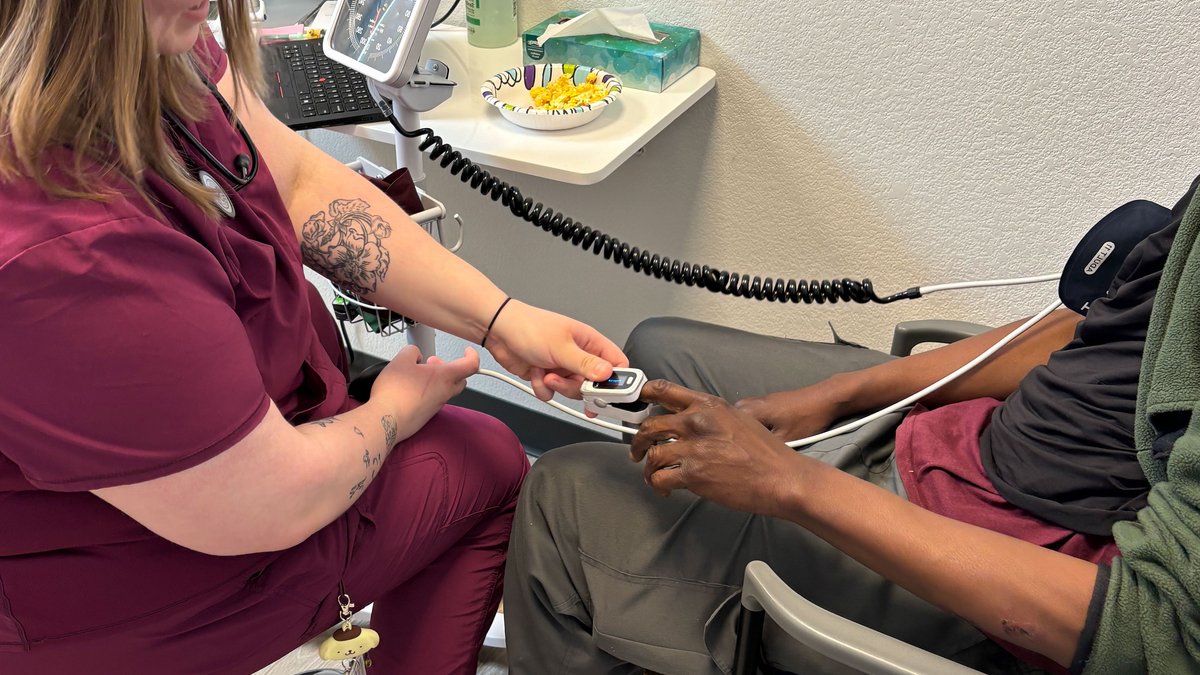
Tywon Pugh has seizures that make finding and keeping a job difficult. A manager at a fast-food restaurant in Missoula, Montana, once called him a “liability to the job site” after a seizure occurred during his shift.
When the 46-year-old lost work in the past, his wife covered their rent.
She died last year. Soon after, Pugh became homeless. His problem with alcohol became worse, which made managing his seizures more difficult. “When she died, my whole base was depleted,” Pugh said.
Medicaid pays for the prescriptions that keep Pugh’s seizures at bay. The government-subsidized health coverage would also pay for an addiction treatment program that Pugh said he has tried to get into, but he was told there’s a waitlist. Pugh’s goal has been to get healthy enough to work again. But he’s worried about being able to keep the Medicaid coverage he needs to get to that point.
Related: Baltimore Reimagines 911 Calls and Response Teams
In the spring, the federal government finalized regulations requiring millions of people who receive Medicaid benefits to prove they’re working, volunteering, or going to school to keep their coverage. States have until January to begin those checks, though Montana, Arkansas, and Nebraska have already started implementing them. The Trump administration’s federal work requirements exempt certain groups of people: those with disabilities, those older than 64, pregnant people, and Native Americans, among others. To receive an exemption, anyone without a clear-cut qualification will have to prove they’re too sick to work.
However, the administration decided that being homeless isn’t a medical condition and can’t count as an automatic out from having to meet the new requirements. Many conservative policymakers support work requirements, and some states have attempted to implement such rules for years. At least four states — Montana, Arizona, Kentucky, and Utah — previously proposed policies that included homelessness as an exemption. Federal officials have said that’s not allowed, confirming that states must stick to the federal government’s list of exemptions.
Homelessness in the U.S. increased by 27% from 2013 to 2025, according to data from the Department of Housing and Urban Development. Last year, about 746,000 people were homeless. Many, like Pugh, qualified for Medicaid, though the number of enrollees who are homeless is difficult to measure. In 2023, 55% of patients who received medical or behavioral health services through one of the nation’s roughly 300 Health Care for the Homeless programs were enrolled in Medicaid.
Jennifer Tolbert, deputy director of KFF’s Program on Medicaid and the Uninsured, said the federal regulations are a lot stricter than many states had expected. “It took everyone by surprise,” Tolbert said. Mehmet Oz, who leads the Centers for Medicare & Medicaid Services, touted the regulations as a “path to prosperity” during a press conference in June, stating, “We need to get people to try to work.” In June, 25 mostly Democratic-led states sued the Trump administration over the regulations, arguing the medical frailty standard would be too hard for enrollees to meet. The work requirements are projected to increase the number of uninsured people nationwide by more than 5 million by 2034, according to the Congressional Budget Office.


