
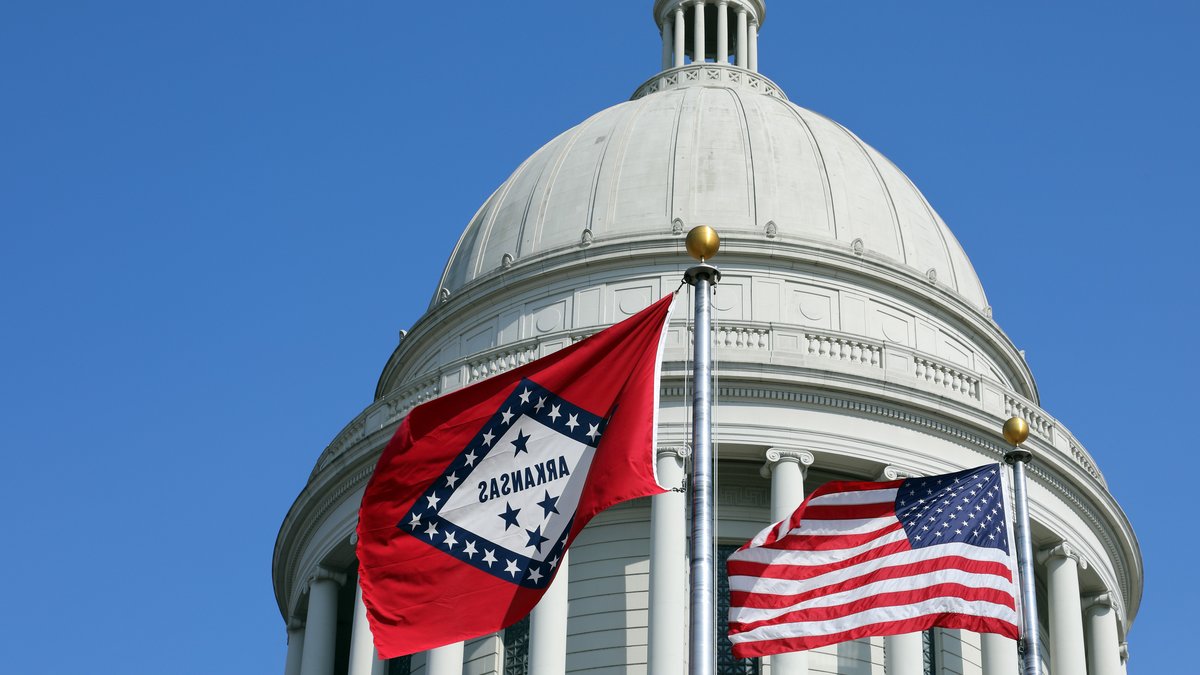
About 200,000 low-income Arkansans could see major changes to their health coverage next year after the Trump administration recently informed state officials it will not renew a key Medicaid agreement with the federal government. The decision by federal officials, citing authority granted under President Donald Trump’s signature tax-and-spending law, suggests the GOP-led state’s predicament could foretell other repercussions in how states are allowed to run the program under federal waivers.
Nearly every state has at least one waiver to run its Medicaid program differently than required by federal law, such as allowing the use of private managed-care plans or expanding eligibility for mental health or long-term care services. Some Medicaid waivers have stretched decades, renewed by presidential administrations of both parties, effectively making the demonstration programs they created permanent.
Arkansas is one of a dozen states with a waiver expiring Dec. 31 that face the additional restrictions the Trump administration has placed on new or renewed waivers. Though it has yet to finalize its decision, the federal Centers for Medicare & Medicaid Services said Arkansas’ 13-year-old waiver does not comply with new “budget neutrality” rules that take effect in January, said Gavin Lesnick, a spokesperson for the Arkansas Department of Human Services.
The state is now seeking a two-year extension after hearing from CMS that its request for a five-year renewal would not be granted. If its Medicaid expansion waiver is not renewed, Arkansas officials have said they will continue offering expanded eligibility through existing Medicaid law, a change that could leave enrollees with access to fewer doctors and other health providers.
Rather than place more people in its traditional Medicaid program serving largely children, pregnant women, and disabled people, Arkansas obtained a waiver to buy Affordable Care Act marketplace policies from private insurers for adults covered by the Medicaid expansion. This “private option” gave enrollees greater choice of doctors and other health providers, because some doctors are more willing to see patients with private coverage, which generally pays more than regular Medicaid.
Related: Husband Kicked From Hospice for Dying Too Slowly
Critics characterize the new waiver rules as part of a Trump administration effort to dramatically shrink Medicaid, the government program for those who are low-income or disabled, which grew rapidly under Presidents Barack Obama and Joe Biden. Nicole Huberfeld, a professor of health law at Boston University, said the new waiver rules are a way to cut Medicaid expansion and the Medicaid program.
Medicaid enrollees won’t know whom to blame if they lose coverage because the administration is using arcane regulatory processes to make the changes, Huberfeld said. At issue are waivers granted by the government that allow states flexibility from existing Medicaid law in how they cover low-income residents, as long as the changes will not increase what Medicaid costs the federal government.
The Trump administration said in June that it would not renew or approve any waivers unless CMS first certified that they would not increase costs to the federal government. In its new guidance, the agency said the new waiver rules are expected to reduce federal spending. CMS spokesperson Timothy Support said in an email that the federal waivers are intended “to test innovative approaches to delivering care, not provide an open-ended mechanism for increasing federal spending.”
Other states with waivers expiring at the end of December include Georgia, which has added about 18,000 low-income people to Medicaid under its waiver, and California, which has used its waiver to expand coverage of social services including food and housing. California and Georgia Medicaid officials told journalists that they are still working with CMS in hopes of renewing their waivers.
The loss of federal waiver approval could cause states to curtail benefits or eligibility expansions. In Arkansas, it would mean redesigning the state’s Medicaid expansion program. Arkansas’ initial waiver was granted in 2013, when its Democratic governor at the time worked with a Republican-controlled legislature to adopt a pioneering style of Medicaid expansion under the Affordable Care Act.
Related: Doctors sidestep Trump CDC vaccine guidance
As the situation unfolds, states will have to adapt to the new waiver rules, potentially leading to changes in their Medicaid programs. The Trump administration’s new restrictions on waivers could affect millions of enrollees and billions in spending, with about a third of the almost $600 billion in federal spending on Medicaid and the Children’s Health Insurance Program in 2024 supported programs created by waivers, according to CMS.
States will have to clear several more bureaucratic hurdles to retain waivers under the new CMS guidance, said Alice Lam, a managing director with consulting and legal firm Manatt. That could lead to fewer benefits or reduce the number of people eligible for Medicaid, she said.
Robert Nelb, director of policy at America’s Essential Hospitals, which represents safety net hospitals, said he and most experts believed when it passed that the relevant law was merely codifying CMS policy on budget neutrality. But the Trump administration has interpreted the law to restrict states’ use of waivers, he said.
Nelb said many long-standing waivers that have been renewed multiple times are now at risk and that the loss of state waivers could threaten money hospitals rely on to cover uninsured patients and improve care in their communities. “There is a real concern that this will put added burdens on states up front and slow down new innovations in Medicaid,” Nelb said.
In 2025, the Trump administration told states it would no longer renew Medicaid waivers to help enrollees with job training or to allow continuous eligibility for adults and children for specific time periods without verifying their income eligibility. Sam Dubke, a spokesperson for Republican Arkansas Gov. Sarah Huckabee Sanders, told journalists that the Sanders administration is trying to negotiate a temporary extension of its waiver “to ensure impacted Arkansans maintain access to quality, affordable healthcare during this transition period.”


